
Why Talking Is Not Always Enough to Release Trauma by Mark Stubbles
/
I suffered from serious dissociation to the point of blackouts, and a constant feeling that the world was out to get me. Traditional approaches weren't touching the damage I was carrying. It was only when I began studying hypnosis and inner child work that I began to get better. This personal transformation is what motivates me today, helping others move from a state of survival is what I find rewarding and meaningful.
I didn't choose to become a hypnotherapist purely because hypnosis interested me. I chose it because I had to save myself. Growing up, I had a mother struggling with emotional regulation and a father who used verbal and sometimes physical violence as control, I was the 'black sheep' of the family. Even my grandparents house, my 'safe haven'' was fraught with enmeshment and gaslighting. By the time I reached adulthood, I was a 'chain-smoking mess' stuck in a cycle of toxic coping strategies, failed relationships, and a multi-year custody battle that left me financially and emotionally drained.
I suffered from serious dissociation to the point of blackouts, and a constant feeling that the world was out to get me. Traditional approaches weren't touching the damage I was carrying. It was only when I began studying hypnosis and inner child work that I began to get better. This personal transformation is what motivates me today, helping others move from a state of survival is what I find rewarding and meaningful.
For many of us navigating the aftermath of relational trauma and narcissistic abuse, recovery often hits an invisible wall. You may have spent years in talk therapy, intellectually mapping out your triggers and the dynamics of what happened to you. You understand the why and the how, yet your body has not received the message. You still feel the heavy pull of the freeze response or the sudden spike of a racing heart when there is no logical threat.
This plateau exists because trauma is a physiological state, not just a story. While traditional therapy is invaluable for gaining insight, it primarily targets the prefrontal cortex. This is the logical, analytical part of the brain. However, the freeze response is governed by the dorsal vagal branch of the nervous system. This area of the brain does not speak the language of logic.
To move past this plateau, we have to communicate with the part of the mind where these responses are stored. We must speak to what is commonly known as the subconscious. It is important to note that the existence of a subconscious is not scientifically proven, and some practitioners in the hypnotherapy field claim it does not exist as a separate entity. However, as a working model, it helps us understand the involuntary processes of the nervous system that operate outside of our conscious awareness.
Why Positive Affirmations Often Fail
The human mind has what is known as a critical filter. This is a gatekeeper that compares new information against our existing beliefs and stored experiences. When a survivor has been conditioned by an abuser to believe they are unworthy or in constant danger, a logical reassurance like "you are safe and worthy" is often rejected by this filter. It conflicts with the data stored during years of abuse.
A child growing up with a narcissistic family, as I did, is particularly vulnerable to this. Neuroplasticity is at its highest until the age of five. During this window, you will take what the adults around you say as truth. These early messages are encoded into the developing brain. This is why logical adult reasoning often feels powerless against a deeply held belief formed in early childhood. The critical filter is simply doing its job by protecting the original data it received when the brain was most plastic.
Communicating with the Nervous System
By treating the subconscious as a functioning system of the brain, we can use hypnotic language to provide the "coding" it needs to update. We are not trying to argue with the logical mind. Instead, we are using metaphor and permissive suggestion to reach the parts of the nervous system that govern the freeze response. According to Polyvagal Theory (Porges, 2011), these responses are biological. They are not something you can simply think your way out of.
The Internalized Abuser and the Power of the Introject
One of the most debilitating aspects of C-PTSD is the introject. This is the internalized voice of the abuser. Long after the relationship has ended, that voice remains. It operates as a critical filter that keeps the survivor in a state of high alert. It repeats the criticisms and the threats of the past, making the present feel dangerous.
In my work, I find that addressing this voice through hypnotic language is more effective than trying to argue it away. We do not try to suppress the voice. Instead, we change how the brain perceives its submodalities. For instance, if that internal voice is loud and feels like it is right in your ear, we can use hypnotic suggestion to move the location of that voice. We might imagine it coming from a distance, or even changing its tone to something ridiculous.
This interrupts the biological stress response that the voice usually triggers. By changing the way we perceive the voice, we strip it of its authority. This is a vital step in de-programming the psychological impact of narcissistic abuse.
Using The Rewind Technique
To address the most vivid traumatic memories, we use a specific protocol often referred to in clinical literature as Visual-Kinesthetic Dissociation (VKD), or the Rewind Technique. This method is designed to provide double dissociation. It allows the survivor to process a memory without being re-traumatized.
Research into Memory Reconsolidation (Ecker, Ticic, and Hulley, 2012) shows that when we access a traumatic memory while simultaneously feeling a sense of safety and distance, the brain can actually update the emotional charge.
In the Rewind Technique, we might imagine sitting in a cinema, watching a film of the event from the projection booth. These layers of distance ensure the nervous system remains in a ventral vagal state of safety. By rewinding the film quickly, we provide the brain with a new, non-threatening way to store the information. We are not erasing the past, but we are stripping it of its power to trigger a physiological freeze in the present.
Using Clean Language
Going back to Polyvagal Theory, the freeze response is a survival mechanism. Your body is not being difficult. It is trying to protect you. However, the body can become stuck in this dorsal vagal state, leading to exhaustion, numbness, and brain fog.
Hypnotic language uses clean and open-ended questions to offer the nervous system an out. Standard therapy might ask, "how does that make you feel?" which forces the survivor back into the analytical mind to find a label. In contrast, Clean Language might ask, "and when you feel that squeeze in your chest, what kind of squeeze is that?"
This invites the subconscious to provide a metaphor. Perhaps the squeeze feels like a tight knot or a heavy stone. Once we have the metaphor, we can work with it. We might ask, "and when there is a heavy stone, what would that stone like to have happen?" This allows the survivor to lead the healing process. It bypasses the shoulds of the logical mind and addresses the bottom-up processes described by experts like Bessel van der Kolk in The Body Keeps the Score.
Reclaiming Autonomy Through Permissive Language
Like many survivors I was never comfortable with authority and people trying to gain authority over me. Authority figures are a trigger for people like us. If a practitioner or a book tells you "you must do this," it can trigger a defensive response. This is why permissive language is so vital in trauma recovery. We use phrases like:
● "I wonder if it is possible for your shoulders to notice they are supported by the chair."
● "As you notice your breath, you might begin to realize that the then is over, and the now is safe."
These subtle shifts do not trigger the critical filter because they are framed as possibilities rather than commands. They restore the survivor's agency. This is an act of restoring the autonomy that was stolen during the abuse.
When we use commands, we risk mimicking the power dynamics of the original abuse. When we use permissive language, we invite the nervous system to choose safety. This choice is where true healing begins.
Coming Home to the Present
Recovery is about helping your body and mind finally exist in the present moment, free from the conditioning of the past. When we speak the language the nervous system understands, using metaphor and permissive suggestion, we give it permission to complete the protective responses it had to freeze mid-action.
The goal is to ensure the past stops running the show. By moving beyond simple insight and working at the level where trauma is actually encoded, we can transition from knowing we are safe to actually feeling it. We allow the body to finally come home.
References and Evidence-Based Resources
● Ecker, B., Ticic, R., and Hulley, L. (2012). Unlocking the Emotional Brain: Eliminating Symptoms at Their Roots Using Memory Reconsolidation. Routledge.
● Guy, A., and Nicolaou, A. (2008). The Rewind Technique: The treatment of choice for PTSD. Human Givens Journal.
● Porges, S. W. (2011). The Polyvagal Theory: Neurophysiological Foundations of Emotions, Attachment, Communication, and Self-regulation. W. W. Norton and Company.
● Van der Kolk, B. A. (2014). The Body Keeps the Score: Brain, Mind, and Body in the Healing of Trauma. Viking.
Author Bio
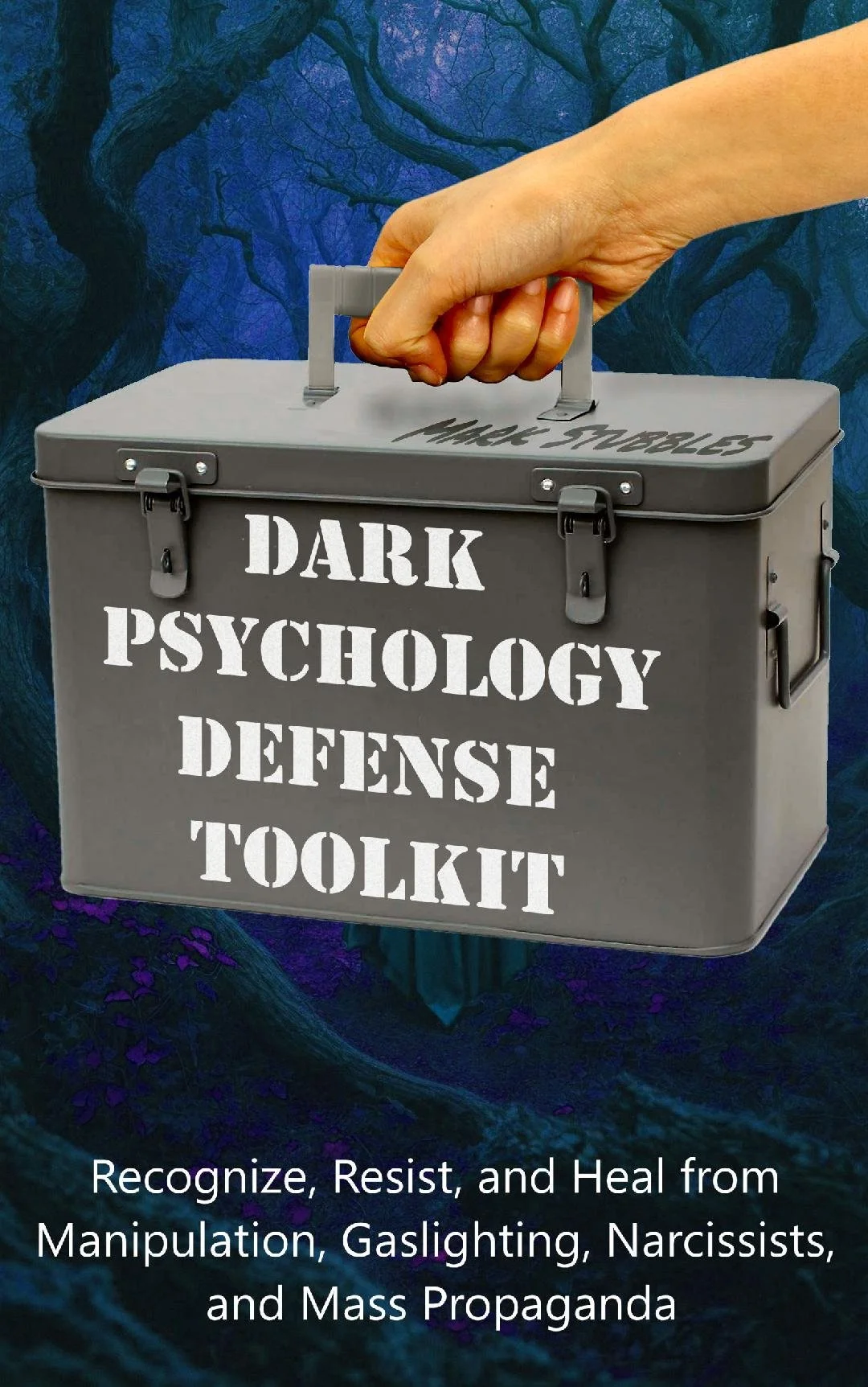
Mark Stubbles is a hypnotherapist and author of the Dark Psychology Defence Toolkit. A survivor of narcissistic abuse, he focuses on the intersection of neurobiology and hypnotic language to help others de-program internalized abuse and reclaim their mental autonomy.
